
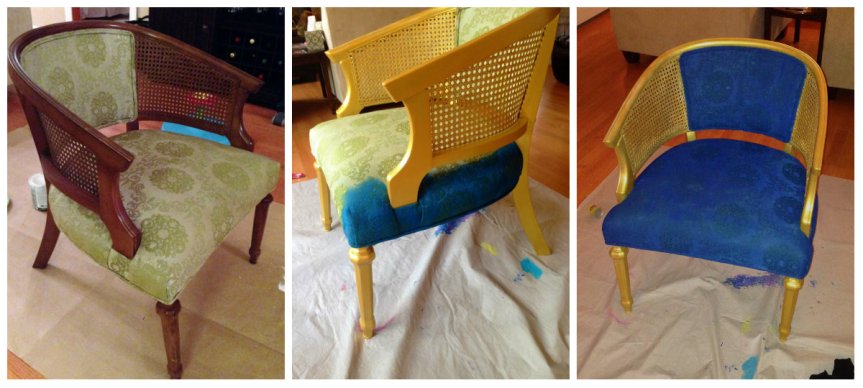
Yes, you can paint upholstery! I spent many years solely re-covering furniture before I discovered that I could actually just paint it. Painting may not be for all furniture or fabrics, I still often choose to re-upholster pieces rather than paint them, but it is a great option! Painting works well for pieces that may have minor blemishes in the fabric, such as fading or light stains. It’s an option if the fabric is beautiful but it’s just in the wrong color and it’s also an easier way out for difficult to re-cover pieces (like tufted chairs).
I have painted upholstery a few times now and I have used various methods. The one I am going to share with you today is my preferred method. This method uses textile medium, acrylic paint and water in a 1:1:1½ ratio. Painting does change the texture of the upholstery, it will become a bit more stiff so I wouldn’t use it on a piece you consider your “comfy” chair. Different fabrics produce different results. My first rule of thumb for this method is to put a few drops of water on the upholstery first. I want to make sure that the water absorbs into the fabric and doesn’t completely bead up and roll off. If the water absorbs into the fabric, so will my paint mixture. I personally don’t want layers of paint sitting on top of the fabric, that will make it stiff and potentially crack down the road. Keep in mind, this method will not cover up any dark stains or patterns. The pattern will simply become a variation of the chosen paint color. Although I haven’t tried it, I would assume you also cannot go from dark to light using this particular method.
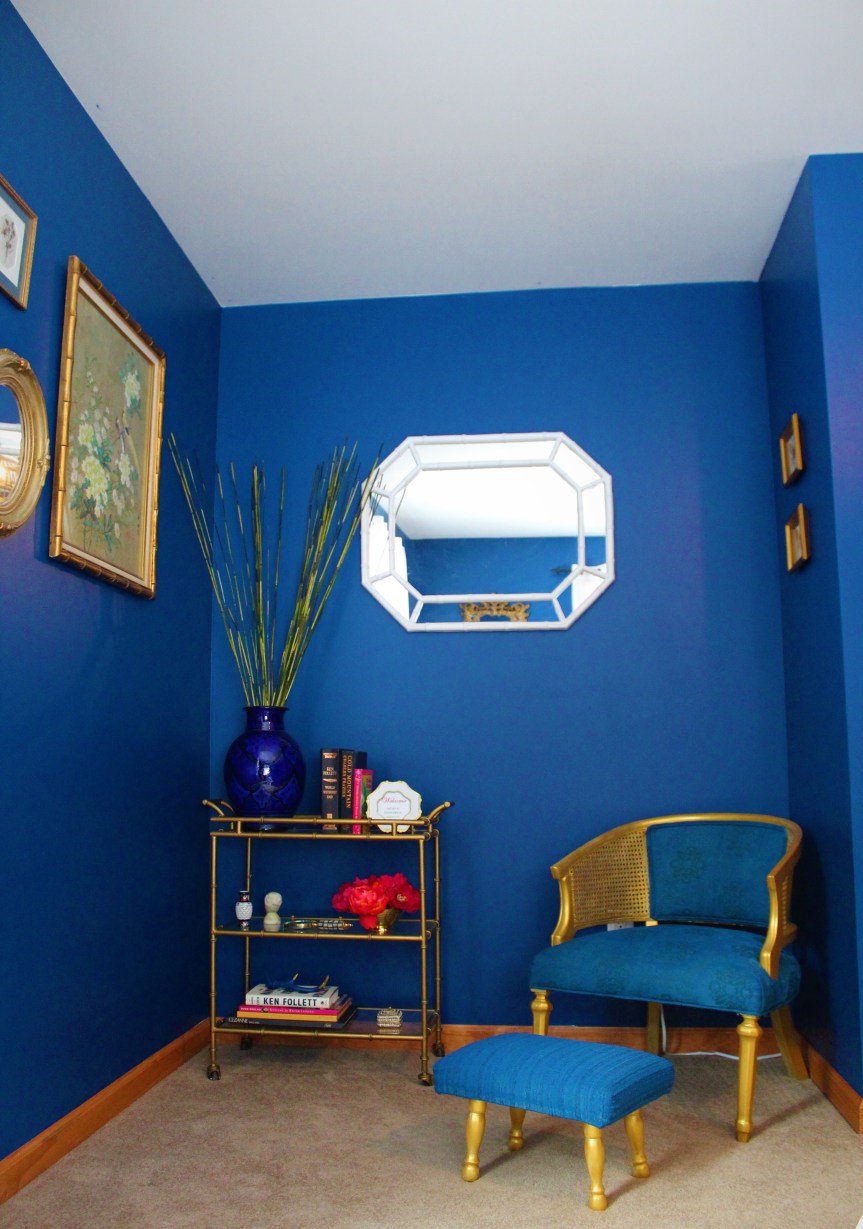
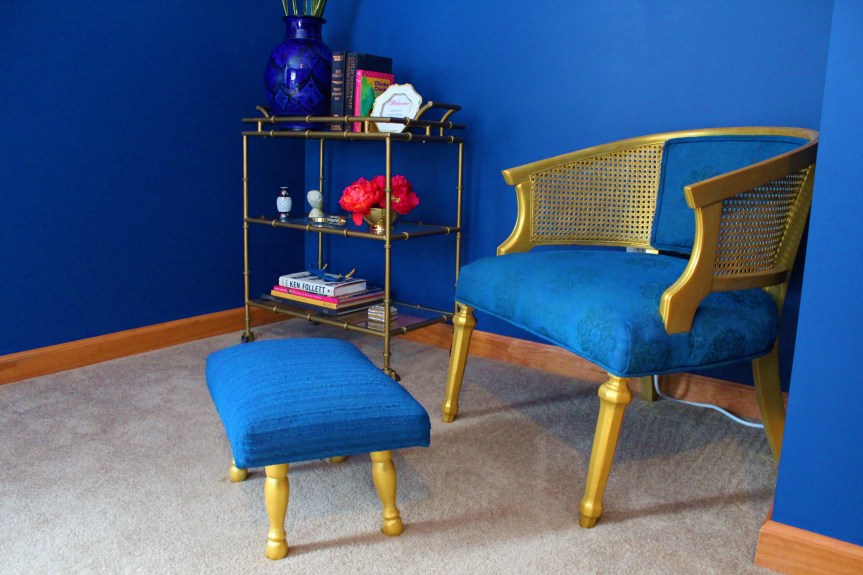
This chair was done for my upstairs guest room (a continuous “work in progress”). I wanted it to match the walls, so I used the leftover wall paint for this project. I found this chair at an antique store for only $17 ….this is why I love antiquing in rural areas.
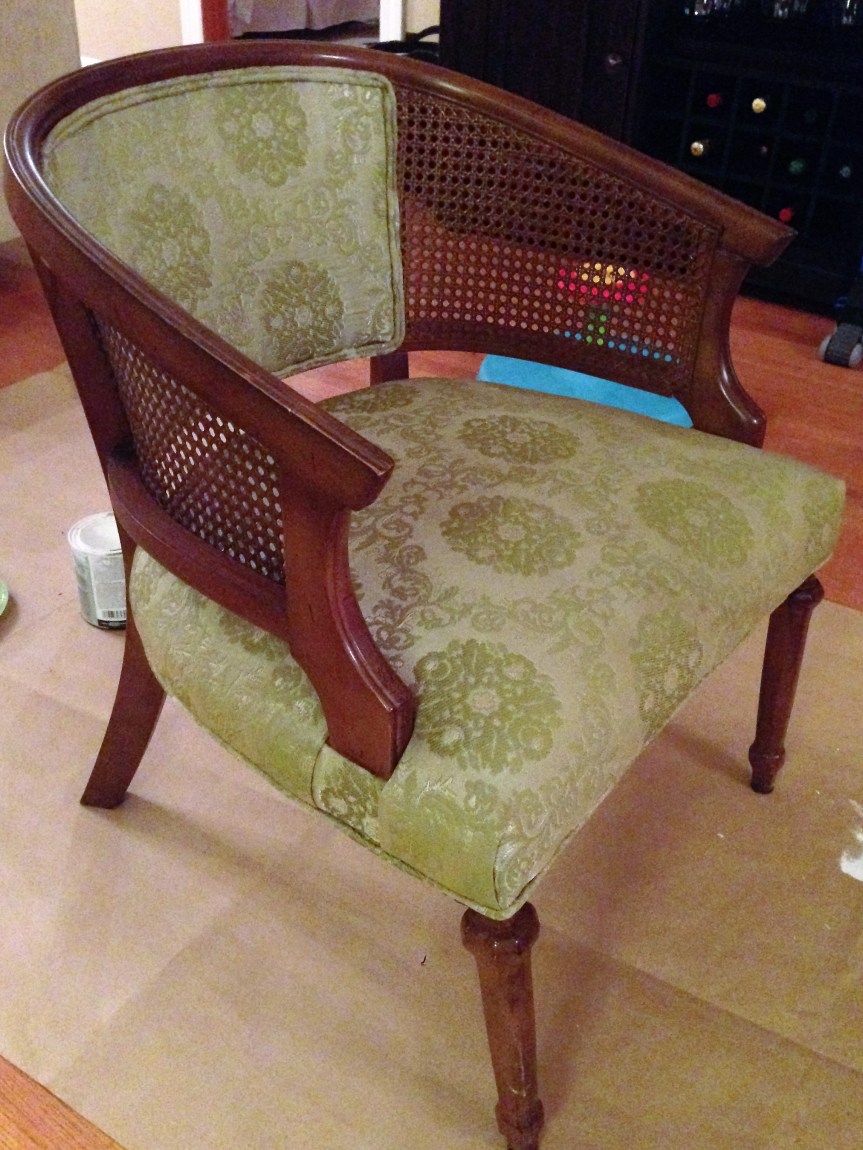
First, I primed the wood and painted it gold. I used an acrylic craft paint to do this (which I do not normally do) and I’m not thrilled with the results. I will most likely be painting or buffing over it, but for the sake of this post, pretend it’s a darker gold 😉
I found an old Tupperware container to mix my paint in. I used paper bathroom cups as my form of measurement …cause that’s how I roll. I used 1 part Plaid Delta Ceramcoat Textile Medium (I found this at Michael’s but it can also be found on Amazon), 1 part acrylic paint (I used leftover Behr interior wall paint) and 1 ½ parts water. Before painting, I vacuumed the upholstery to get up any dust or schmutz. I used squirt bottle filled with water to spray down the fabric before I began painting. This helps the paint go on smoothly. I was heavy handed with the spray bottle and did a section at a time. I painted my mixture on using a wall paint brush.
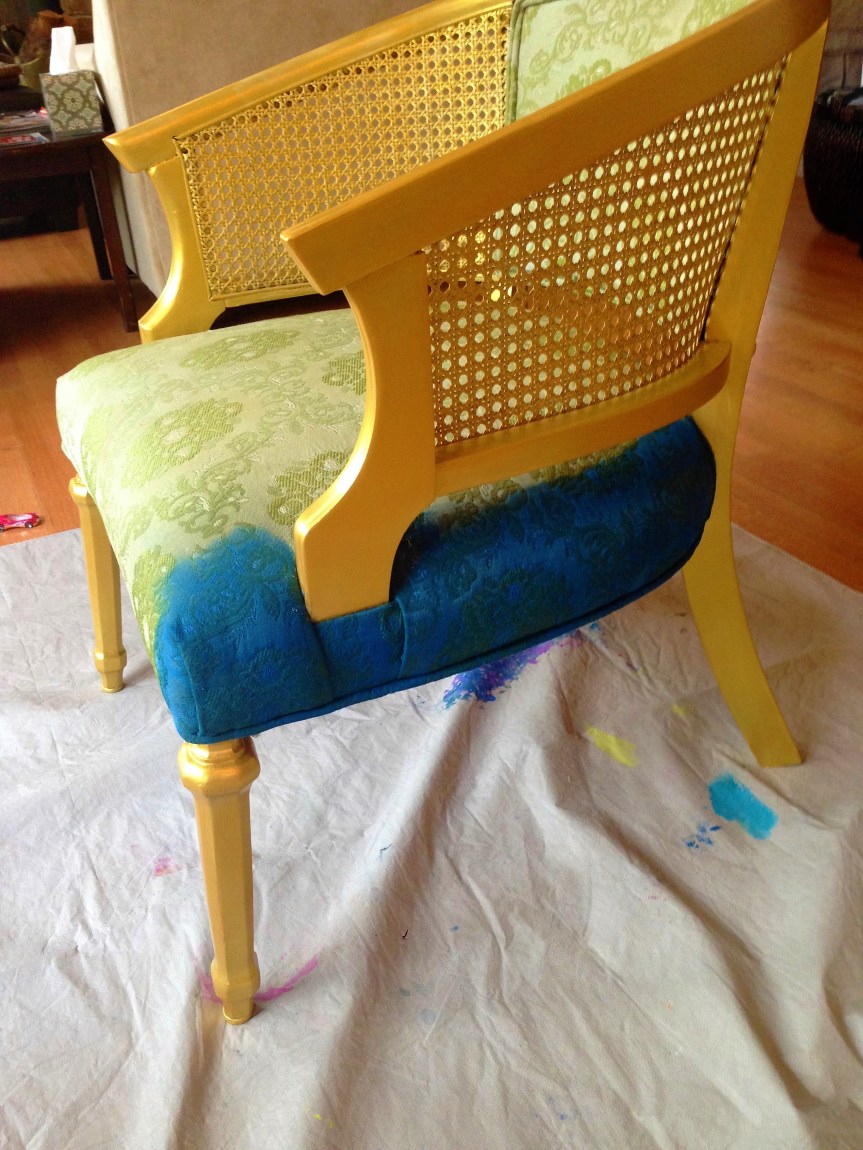
Painting upholstery this way requires several coats and should dry completely between coats. I let my chair sit overnight. This was after the first coat:

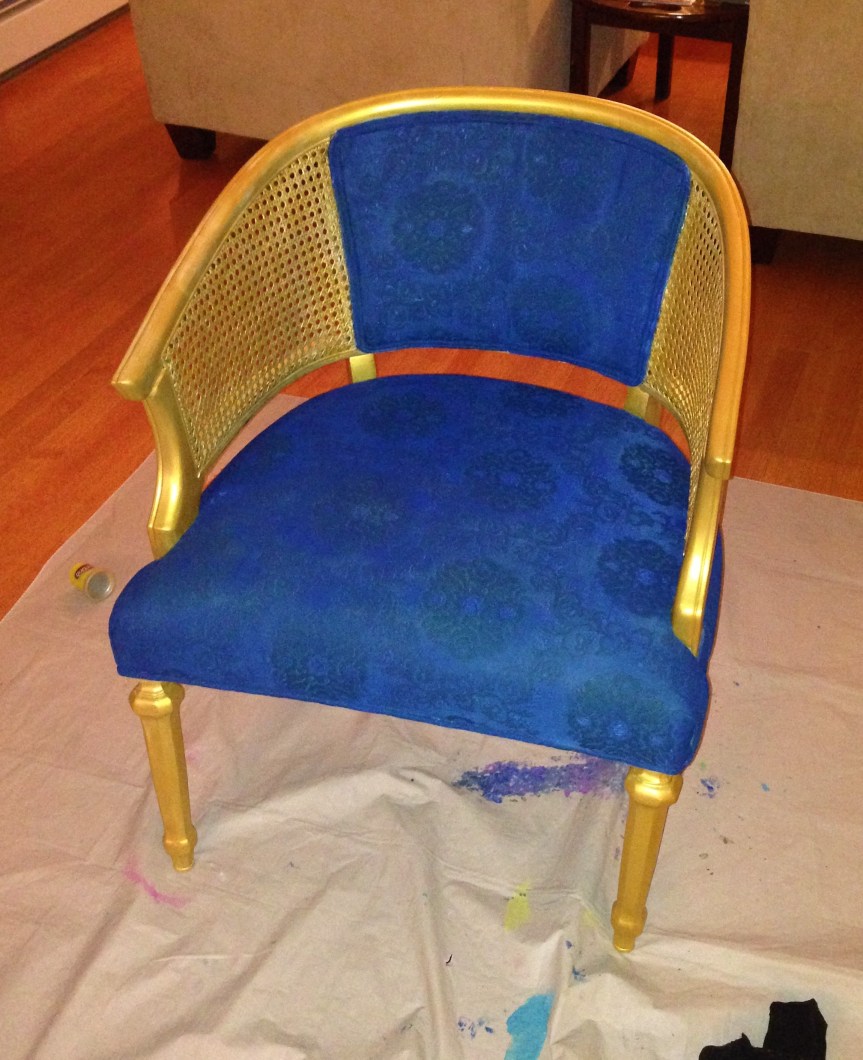
I made another batch of mixture and applied a second coat the next morning. Later in the day I “spot painted” over the areas where it needed a bit more coverage. I probably should have done a third coat, but I was impatient and it looked good to go. Other chairs I have painted typically required about three coats.
Here it is after the second coat:
I later found this footstool at Salvation Army for $1.99 and thought it would be a nice addition to the chair. I followed the same method, using the same paints.


All said and done, this is what I ended up with:


 Over the One Lane Bridge
Very pretty!
LikeLike
Gorgeous!!!!!
LikeLike
Great idea, but, I’m curious. Is the fabric soft and does the paint rub off on your clothes?
LikeLike
No, once the paint is dry it does not rub off on your clothes! 🙂 I have three chairs at home that I have done this way that get regular use, one in particular in my daughter’s room that is used daily, and we have never had any issues or paint on our clothes. The fabric does get a bit stiff, but it really does vary from fabric to fabric. For example, this chair just feels a little stiff. It is still smooth to the touch. The footstool was a thicker, more coarse fabris to begin with and it came out a bit rough. I have read that people use a fine grit sandpaper to sand down rough areas and make them softer. I have not really found the need with this method and the upholstries I have choosen.
LikeLike
This is really cool! I didn’t realize the chair in Parker’s room was painted! It’s very comfortable. Love the Blue Room! 🙂
LikeLike